video-library

Agile Skills Video Library

Answers on demand

Eight on-demand video courses from Mike Cohn and Mountain Goat Software. Every video includes an AI-Powered Agile Coach that turns your lessons into an interactive coaching experience.

Ask questions and comments like “How can I apply this to my sprint?” or “Give me an example for my industry” and tailor the training to your specific needs.

 
AI Powered Agile Coach for EVERY lesson
214 Concise, focused lessons
22+ hours of expert video content
27 PDUs / SEUs

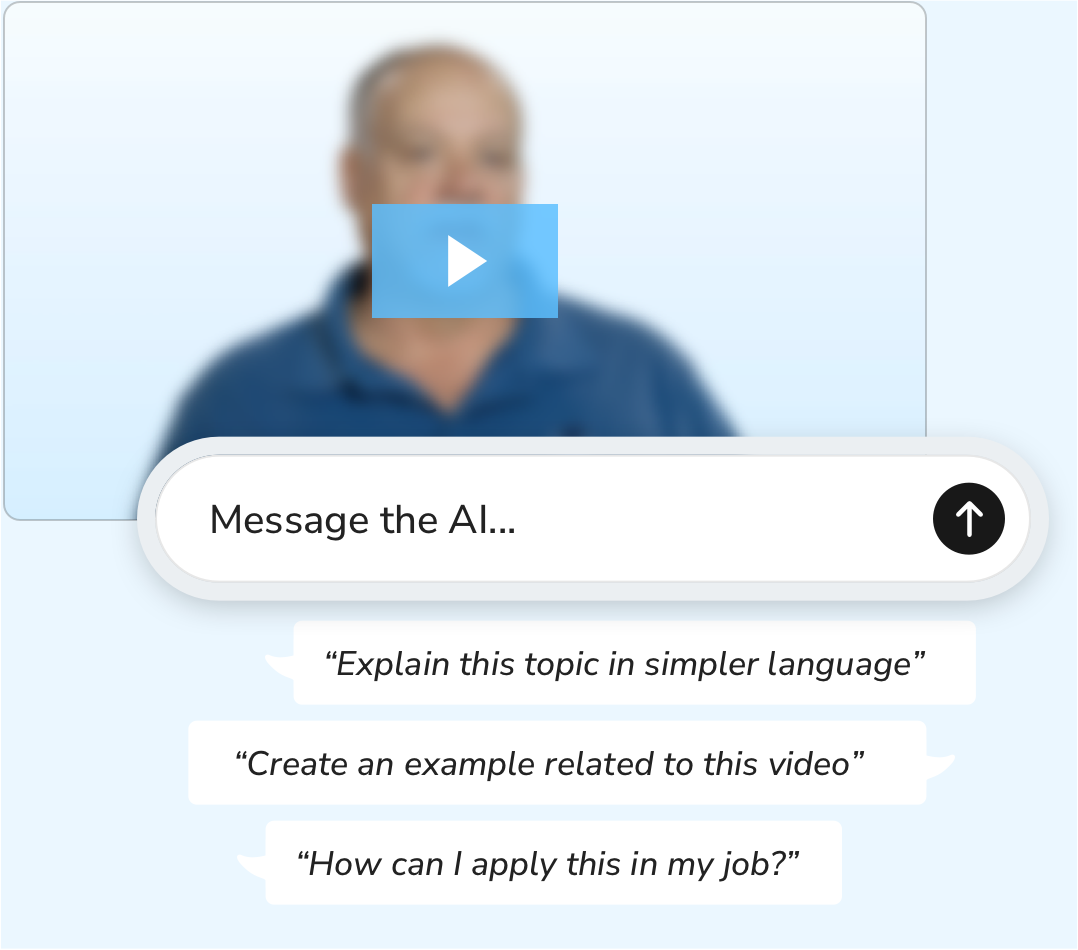
Introducing the AI-Powered Agile Coach

Message the AI

Your personal Agile Coach, Built Into Every Lesson

This brand-new feature transforms traditional video training into active, personalized coaching.

As you watch, you can ask questions like:

  • “How would this work for my remote team?”

  • “Can you give me an example of this for a product backlog?”

  • “How do I explain this concept to a stakeholder?”

You’ll get clear, practical answers based on the content you’re watching—instantly.

Whether you’re running your next retrospective, planning a sprint, or improving your backlog, the AI coach gives you real-time guidance that helps you apply what you learn right away.

Get Lifetime Access

What You'll Be Able to Do

icon-team

Stronger Teams

Build collaboration and confidence across your Scrum team with courses like Better Retrospectives and Scrum Repair Guide.

Use the AI-Powered Agile Coach to get real-time answers, stories, and examples that help you explain concepts and coach your team to improve, fast.

icon-trophy-cup

Sharper Skills

Master practical techniques you can use right away. Write better stories with Better User Stories and estimate with confidence in Agile Estimating & Planning.

Your AI-Powered Agile Coach gives step-by-step guidance and tailored examples so you can apply every lesson directly to your projects.

icon-rocket

Career Opportunities

Expand your expertise, grow your credibility, and open new doors for your career.

The AI-Powered Agile Coach turns every video into a personal mentor, helping you deepen your understanding and stay ahead in your agile journey.

You don’t always need another class

Often you just need answers. Especially when Scrum challenges hit you mid-sprint:

  • User stories that are impossible to split

  • Planning sessions that drag without producing a clear goal

  • Retros where no-one speaks

  • Stakeholders pressing for deadlines you know you can't meet

All 8 Video Courses
$1,290  Just $99
Buy Now »

The Godfather of Story Points has done it! Successfully putting together a one-stop course to  teach me everything he does when working with teams. WOW! How can I not succeed now using them correctly and teaching others the right way?!

Justin Amore Photo
Justin Amore
It can’t get any better than this Estimating is one of the toughest things that we face in Agile Projects. No body explains it better than the man himself. The logical sequence in which the content is presented, gives a better understanding about estimating. The reasons to use Story Points over other units is explained crystal clearly. A correct mix of Mike in person speaking to you and animated concepts helps you to focus on learning rather than just listening. Even after completing the course, I had the visual of Mike explaining the concept for few days afterwards. A highly recommended course for any agilist.
Raju K.
This course was absolutely packed with tips, advice, and best practices for both avoiding and resolving issues that occur in using Scrum. I probably checked off a dozen or more issues that I personally experienced over the past 4-5 years that I'd have paid big money for to have the insights that Mike provided in this course. This was by far the most practical, useful course on Scrum I've ever taken. I plan to review this course over again as there is just so much useful stuff.
Gregory Luze
This course goes much further than just treating basics. It really deals with well-known problems probably every Scrum Master and/or Scrum Coach experiences. Mike always offers several solutions considering different circumstances introducing appropriate examples as well. With his extensive knowledge of all parts of agility he convinces and encourages me to try out his hints without hesitation. I really like the length of the videos, all necessary is said and all unnecessary is omitted. The content is really absolutely substantial, interesting and helpful. I recommend this course to every practising SM and agile Coach.
Eva Gysling

Eight Courses. Practical Help for Every Challenge


Better User Stories

With more than 7,000 licenses sold, Better User Stories is one of our most popular training experiences. You get a proven system for writing, organizing, and splitting stories so your team can focus on delivering value instead of arguing in planning meetings. Based on Mike's best-selling book User Stories Applied, this is the definitive course on making user stories work in the real world.

You’ll be able to identify the right personas, run productive story-writing workshops, and create consistent, valuable stories that move smoothly from idea to delivery.

Finally, you’ll know how to split any story to fit within an iteration, and ship faster.

Featured Topics

What Stories Are
  • Introduction
  • Some Sample User Stories
  • Card, Conversation, Confirmation
  • Is a Template for Use Really Necessary Really Necessary
  • Detail Is Deliberately Deferred
  • Stories Are Pointers to Requirements
  • How Stories Differ from ‘System Shall’ Statements
  • How Stories Differ from Use Cases
Users, User Roles and Personas
  • Introduction to User Roles and Personas
  • User Rules – Context, Characteristics, and Criteria
  • How to Do User Role Model
  • Creating Personas for High-Consideration Products
  • Attributes to Consider When Creating a Persona
  • Documenting a Persona
  • Systems and Developers as Users
  • Decorated User Rolls
  • Writing User Stories for the Right User
Story Mapping and Story-Writing Workshops
  • Introduction to Story-Writing Workshops and Story Mapping
  • The Four Times to Write Stories
  • The Significant Objective Focuses the Scope of a Story-Writing Workshop
  • Story-Writing Workshop, Attendees, Duration, and Preparation
  • The Story-Writing Workshop Agenda
  • Story Mapping
  • Going Deeper with Story Mapping
  • Making Decisions with a Story Map
  • Organizing Stories with a Goal Story Hierarchy or a Mind Map
Adding Detail with Conditions of Satisfaction or Acceptance Criteria
  • Introduction to Adding Detail
  • Progressive Refinement – Adding Detail Over Time
  • Epics and Themes – Some Clear, Useful Definitions and Examples.
  • Two Ways of Adding Detail to a Story
  • Why I Prefer Conditions of Satisfaction Rather than Acceptance Criteria
  • How Much Detail Is Appropriate
  • Working with the Team That Wants Too Much Detail
  • Definition of Ready and Why Having One Could Be Dangerous
INVEST in Good Stories
  • Introduction to INVESTing in Good Stories
  • Independent
  • Negotiable
  • Luggable
  • Estimated
  • Small or Sized Appropriately
  • Testable
Splitting Stories
  •  

  • The Introduction to Complex and Compound Stories
  • The SPIDR Approach to Splitting Stories
  • S – Splitting Stories with Spikes
  • P – Splitting Stories Along Paths
  • I – Splitting Stories by Interfaces
  • D – Splitting Stories by Data
  • R – Splitting Stories by Rules
  • Tracer Bullets
  • Closed Stories
  • Three Things to Do When You Can't Split a Story
Overcoming Common Problems
  • Introduction to Overcoming Common Problems
  • Managing Dependencies Between Stories
  • Stories with Too Much Detail
  • Spending Too Much Time Splitting Stories
  • Stories Involving More than One Team
  • Stories That Are Really Tasks
  • Managing the Need for a Requirement Document
Things That Are Not User Stories
  • Introduction to Not Everything Needs to Be a User Story
  • Nonfunctional Require Requirements
  • Stories and Bugs
  • Features from Future–Driven Development
  • Job Stories
  • Looking Further at Job Stories
Wrap Up
  • Remembering the Purpose of User Stories
 

Agile Estimating and Planning

Agile Estimating & Planning shows you how to create reliable estimates that give teams the freedom to deliver while keeping stakeholders confident and informed.

You’ll build a planning process that’s transparent, collaborative, and safe, where teams don’t feel pressured to pad or hide their estimates.

Learn how to balance flexibility with accountability, accelerate planning meetings, and improve the quality of every conversation about time and scope.

Plan realistically, forecast confidently, and deliver with trust instead of tension.

Featured Topics

The Problem and Our Goal
  • Why Plans Go Wrong
  • More Reasons Why Plans Go Wrong
  • Planning at Multiple Levels
  • Good Agile Planning
Iteration Planning
  • Working in the Right Order
  • The Iteration Planning Meeting
  • Velocity-Driven Iteration Planning
  • Estimating Capacity for Commitment Commitment, Driven Planning
  • How Full Should an Iteration Be
  • Commitment-Driven Iteration Planning
  • An Example of Commitment-Driven Iteration Planning
  • Which Type of Iteration Planning Is Best
Story Points and Ideal Days
  • Product Backlog Estimating Units
  • Estimate Size; Derived Duration
  • Ideal Time
  • Story Points
  • How Do You Come Up with a Story Blank Estimate
  • An Example of Estimating with Story Points
  • Getting Started and Staying Within One Order of Magnitude
  • Reasons to Favor Ideal Time
  • Three Advantages to Story Points
  • Story Points Are a Pure Measure of Size
  • Your Time and My Time Cannot Be Added
  • Points Help Avoid Unit Confusion
  • What I Prefer and Do
  • Are Story Points Time or Complexity
Estimating The Product Backlog
  • Some Tips on How to Estimate
  • Disaggregating Product Backlog Items
  • Use the Right Units
  • Planning Poker
  • Why Planning Poker Works
  • Anchoring
  • Relating Points to Hours
Release Planning
  • Release Planning with Historical Velocity Data
  • Forecasting Velocity
  • Predicting Velocity When Team Size Changes
  • Fixed Date Plans
  • Fixed Scope Plan
  • Fixed Price Plans
Topics for Multi-Team Projects
  • Estimating the Product Backlog in a Common Unit
  • Multiple Team Iteration Planning
  • Rolling Lookahead Planning
 

Estimating With Story Points

Cut through the confusion and make story points actually work for your team.

This course shows you how to explain story points clearly to both developers and stakeholders, create consistent estimates across different skill levels, and plan fixed-date or fixed-scope projects with confidence. You’ll uncover and correct the most common mistakes that derail estimation, use practical worksheets to apply lessons immediately, and get access to two exclusive bonus modules on stakeholder communication and agile planning.

Whether you’re new to story points or repairing old habits, this course turns estimation from frustration into focus.

Featured Topics

Why Use Story Points
  • Welcome
  • What Time Doesn't Work?
  • Aren't We Bad at Estimating? Can We Get Better?
  • Why Estimated at All?
What Story Points Are
  • Story Points Are Relative Estimates
  • Amount, Risk, Uncertainty, and Complexity
  • Sequences for Estimating: Fibonacci and Other
  • Get Rid of Big Numbers
  • Agree on What Type of Estimate to Provide
Creating Estimates
  • Establishing a Baseline
  • Why You Don't Want a Baseline Tying Points to Days
  • Planning Poker
  • Affinity Estimation
  • Seven Variations on Affinity Estimation
  • Re-Estimating: If, When, and Why?
  • When to Estimate
  • Why Do You Want the Whole Team to Estimate
  • A Rosetta Stone of Estimates from Multiple Teams
Improving Estimates
  • Triangulate
  • Handling Someone Who Won't Budge
  • Avoid Overly Optimistic Estimates with Buckets
  • Five Ways to Get Better Estimates
  • Four Things to Avoid When Estimating
Introducing Story Points to a Team
  • Overview of Introducing Story Points to a Team
  • How to Introduce Story Points to a Team – Points Are Relative and the Units Are Meaningless
  • How to Introduce Story Points to a Team – Points Are Effort
  • How to Introduce Story Points to a Team – Points Are Influenced by the Amount of Risk, Uncertainty, and Complexity
  • How to Re-Introduce Story Points to a Team That's Been Using Them Incorrectly
  • Overcoming a Reluctance to Estimate
  • How to Plan and Run an Estimating Meeting
Troubleshooting
  • Non-Additive Scales.
  • Estimating Too Much or Not Enough of the Product Backlog
  • Avoiding Estimate Inflation
  • Putting Points on Everything – Should Bugs Get Points?
  • Getting Faster at Estimating
Stakeholders and Story Points
  • What Stakeholders Need to Know About Points
  • What Are Story Points and Why Can't We Just Use Person-Days?
  • Predicting Date and Cost Using Story Points.
  • Why You Can't Measure Productivity or Compare Teams with Points
Planning with Story Points
  • The Components of a Plan
  • Estimating What You Don't Know
  • Estimating Velocity as a Range
  • Estimating Velocity Without Data
  • Fixed-Date Plans
  • Fixed-Scope Plans
Wrap Up
Bonus: Additional Story Points Training
  • Equating Points to Time
  • Getting Hung Up, Trying to Create Perfect Estimate Estimates
  • Overcoming People Problems to Get Good Estimates
 

Better Retrospectives

Turn retrospectives from routine meetings into real engines of improvement.

After this course, you’ll design and facilitate retros that spark honest discussion, engagement, and change. You’ll use frameworks like the Diamond Model of Participation and the Retrospective Menu to keep sessions fresh, focused, and productive. You’ll know how to draw out quieter voices, adapt to different team personalities, and build trust so feedback turns into action.

No more same issues, different sprint. Instead, you’ll leave with the confidence and tools to make every retrospective meaningful.

Featured Topics

Understanding Retrospectives
Facilitation Techniques That Work
The Retrospective Menu
Creating Engaging Retrospectives
Tailoring Retrospectives to Team Dynamics
Enhancing and Building Trust
 

Retrospectives Repair Guide

This course shows you how to fix retrospectives that have lost their spark.

In just over an hour, you’ll tackle 10 of the most common retrospective challenges, from quiet teams and surface-level discussions to remote disengagement and weak follow-through. You’ll learn how to spot the real issues behind recurring problems and apply practical techniques that rebuild trust, energy, and safety.

Retrospectives Repair Guide is your field-tested troubleshooting kit for restoring focus, momentum, and genuine value to every sprint review.

Featured Topics

How to Handle Retrospectives with Quiet Teams
How to Get Your Team to Go Deeper
How to Handle Retrospectives with a Remote Team
How to Start Making Real Progress
How to Handle Teams That Hate Retrospectives
How to Handle Outsiders Who Want to Observe
How to Handle Teams Who Think There’s Nothing Left to Improve
How to Handle Issues Out of Your Control
How to Handle Retrospectives When the Sprint Goes Really Well
How to Use Retrospectives to Build a Strong Team
 

Scrum Repair Guide

When Scrum starts to slip, this course helps you set it right.

With lifetime access to seven focused modules, you’ll get practical, bite-sized lessons that help you spot and solve the issues slowing your team down. You’ll learn how to pinpoint problems before they hurt productivity, manage stakeholder pressure without derailing your sprint, and rebuild focus and energy so your team collaborates at full strength.

Whether you’re new to Scrum or have years of experience, Scrum Repair Guide gives you the tools to restore flow, protect your team, and get back to delivering high-quality products fast.

Featured Topics

Welcome
  • Welcome to the Scrum Repair Guide
The Product Backlog
  • Grooming the Product Backlog: What It Means and Why It's So Important
  • Choosing When to Groom the Product Backlog — In a Meeting or as Needed?
  • Handling Technical Work on the Product Backlog
  • Writing Product Backlog Items of the Right Size
  • Writing Product Backlog Items with the Right Amount of Detail
Estimating and Planning
  • Estimating Product Backlog Items: Why and When to Do It?
  • Overcoming a Fear of Estimating
  • Estimates from Becoming Commitments
  • Claim Credit Only for What Is Completely Done
Sprinting
  • Selecting the Right Sprint Length
  • Five Reasons Teams Don't Deliver Everything in a Sprint
  • What to Do If You Think You Can't Have Anything Potentially Shippable by the End of a Sprint
  • Avoiding Leaving Unfinished Work at the End of a Sprint
  • Minding the Gap: Why You Should Run Sprints Back to Back
  • Handling Firefighting During a Sprint
Problems During Meetings
  • Sprint Planning: Saving Time in Scrum's Longest Meeting
  • Sprint Planning: Avoiding Overcommitting in a Sprint
  • The Daily Scrum Should Be Attended, Not Run
  • Breaking the Daily Scrum Time Box for Distributed Teams
  • Conducting a Review When Not Everything Is Demonstratable
Stakeholders
  • Managing Stakeholder Expectations
  • Handling Early Requests to Lock Down Scope, Schedule, and Cost
  • Moving Away from Written Documentation
Teamwork
  • Convincing Team Members to Work Outside Their Roles
  • Fitting User Experience Design into Scrum
  • Leaving Time for Testing: How to Spread Work Evenly Across the Sprint
  • Adding Automation When Little or None Exists
  • Confronting Agile Hoarders: What to Do When a Team Member Wants Sole Ownership of a Product Backlog Item
  • Dealing with an Overly Busy Product Owner
Culture
  • Preventing Burnout from Sprints
  • Separating Programming and Testing Sprints — Why It's a Bad Idea
  • Managing Risk on Scrum Projects
  • Understanding How Project Managers Fit into Scrum
  • Rewarding a Team for a Job Well Done
Conclusion

Let Go of Knowing

Challenge what you think you know about agile.

Based on Mike's popular keynote, Let Go of Knowing helps you spot the assumptions and biases that quietly hold teams back. Through personal stories and real examples, Mike shows how rethinking long-held beliefs can open the door to better teamwork, smarter decisions, and genuine agility. You’ll discover how to stay curious without over-questioning, and how to create a culture where learning and adaptation come naturally.

Short, honest, and thought-provoking, it’s a reminder that sometimes the biggest breakthroughs start with letting go.

Scrum Foundations

Scrum Foundations gives you a clear, practical introduction to how Scrum really works. In this short course, Mike walks you through the essentials, from the five Scrum values to the roles, events, and artifacts that bring agility to life.

You’ll see how sprint planning, daily scrums, and backlog refinement connect to deliver potentially shippable increments every iteration. You’ll also understand how timeboxing, a clear Definition of Done, and an organized product backlog improve both speed and quality.

It’s the perfect starting point for newcomers,  or a quick, confidence-boosting refresher for experienced practitioners.

Featured Topics

The Scrum Framework
  • Why Scrum Won't Tell You How to Work
  • Empirical vs. Defined Process Thinking
  • Three Core Elements You Need to Start Using Scrum
Scrum Values
  • The Five Values of Scrum
Scrum Roles
  • Scrum Master, the Product Owner, and Developers
  • How a Scrum Team Differs from a Traditional Project Team
  • Implications of Shared Roles on a Scrum Team
Scrum Events
  • Getting Started with Sprint Planning
  • The Heart of Scrum: The Sprint
  • Team Collaboration with the Daily Scrum
  • The Sprint Review: Why It's More Than a Product Demo
  • The Sprint Retrospective: The Scrum Team Self-Reflects
Scrum Artifacts
  • The Product Backlog – Prioritized Features List
  • Sprint Backlog – For Developing the Work of the Sprint
  • The Product Increment – A Step Toward the Product Goal
Efficiency & Quality
  • Timeboxes – Maintaining a Sense of Urgency
  • Product Backlog Refinement – Getting Work Ready

Upcoming Public Training

There are no upcoming courses matching your search right now.

Course Includes:

Money-back guarantee Training recording provided

Your Instructors

Mountain Goat has handpicked instructors that share our training values. These are people with deep experience, who are leading teams with agile today and can give you real-world answers about what does and doesn’t work.

Mike Cohn

With 20+ years of agile training experience, Mike has honed a talent for explaining agile concepts with clear illustrations and real-life examples. Participants enjoy his passion for teaching the agile methodologies in a relatable and digestible way. 

Read more...

Brian Milner

Starting out as a developer, Brian worked up through management layers, then transitioned to Scrum Master, then Coach and now Certified Scrum Trainer. His practical experience in both waterfall and agile organizations helps him clarify what works and what doesn’t, plus he has many years’ experience helping teams transition to agile. 

Read more...

Got a Question?

What happens when you contact us?

  • We’ll get back to you within a day.
  • Answer your training questions and discuss any custom needs.
  • Recommend the best agile training path for your teams and goals.
  • Want to talk to someone? Schedule a call.